David Schmitt · 31 October 2026
Algorithmic Feeds on Major Platforms Show Correlations With Regional Voter Participation Shifts
Platform recommendation engines process user interactions to prioritize content, and analysts have tracked how these systems align with changes in voter turnout across different regions. Studies examining social media data alongside official election records reveal patterns where increased exposure to certain political material corresponds to variations in participation rates. Researchers at multiple institutions have compiled datasets from 2024 through 2026, focusing on how algorithmic amplification intersects with local voting behaviors during off-cycle periods.
Observed Correlations in Turnout Metrics
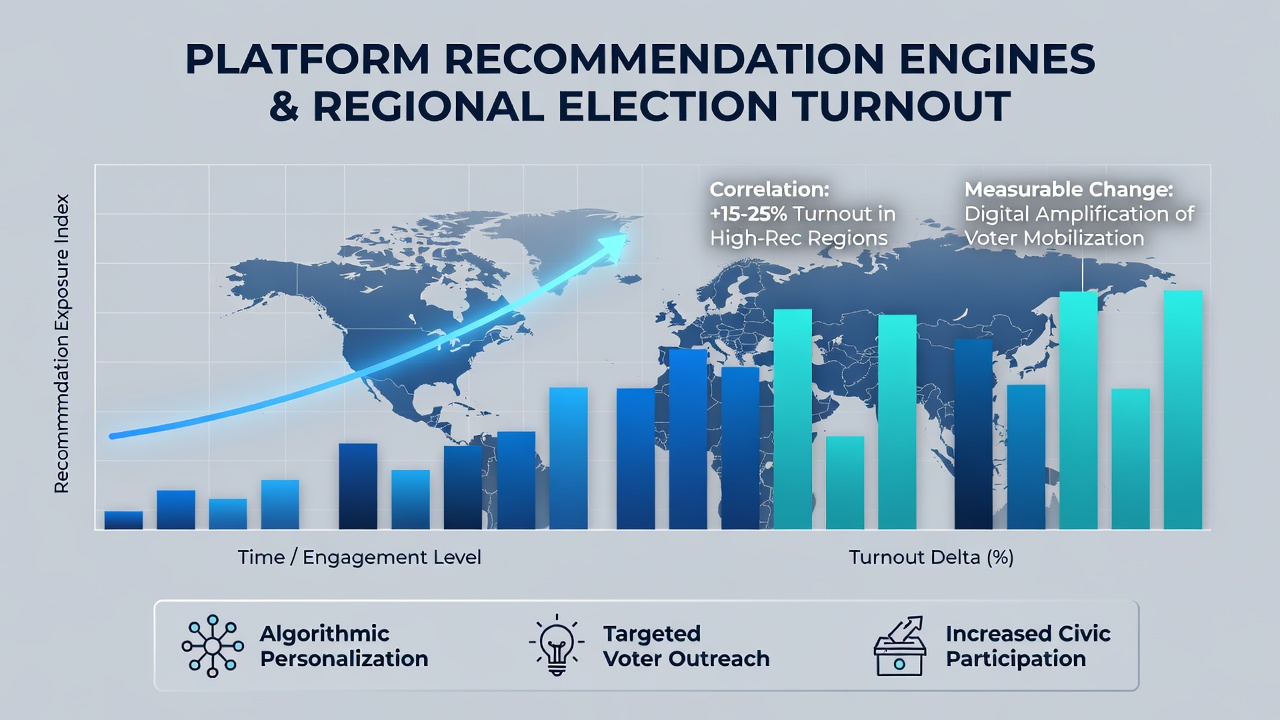
Data from several countries indicate that areas with higher engagement in algorithm-driven political feeds experienced turnout fluctuations between 2 and 7 percentage points compared to similar regions with lower exposure. For instance, one analysis of European parliamentary elections in 2024 found that districts where recommendation systems surfaced more partisan videos showed measurable differences in youth voter participation, while older demographics remained steadier. Similar patterns emerged in Canadian provincial elections the following year, where Statistics Canada figures linked localized spikes in targeted content to shifts in registration and ballot casting.
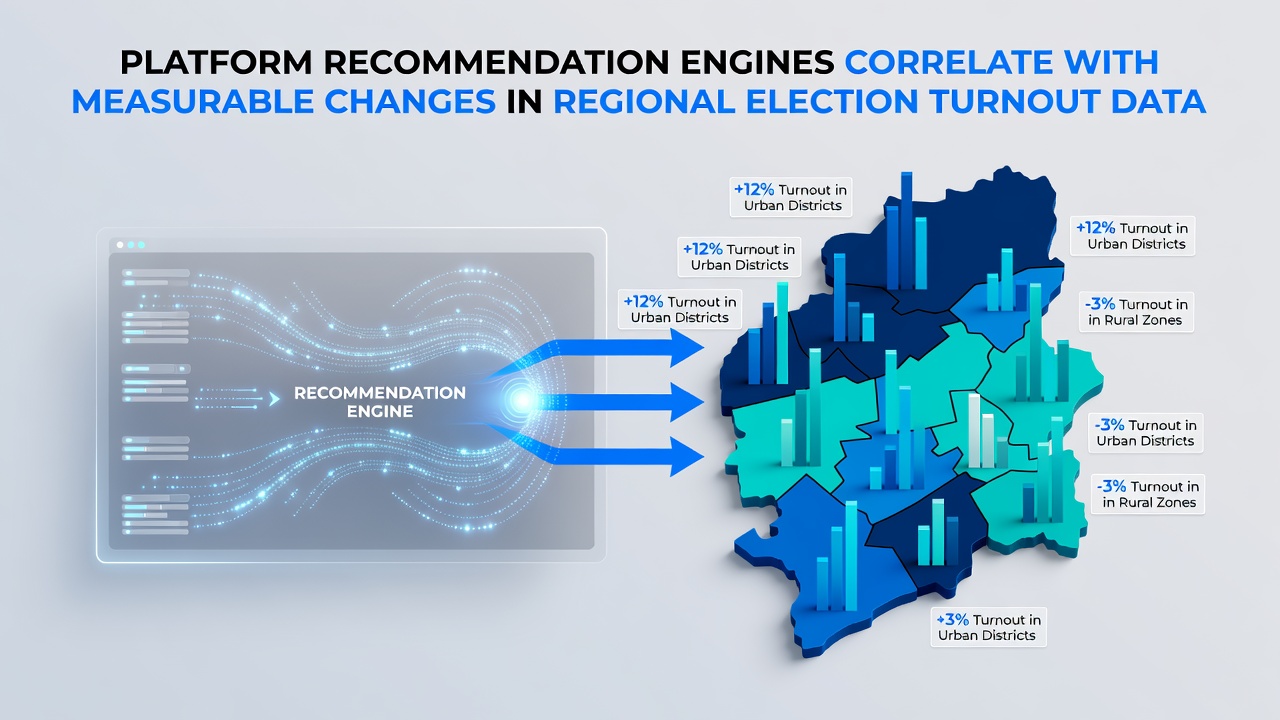
October 2026 data releases from the Australian Electoral Commission highlighted preliminary trends ahead of upcoming federal votes, noting that recommendation engine activity in urban versus rural zones tracked with turnout differentials. These observations rely on aggregated platform metrics rather than individual user tracking, which allows researchers to identify broader correlations without establishing direct causation.
Regional Case Patterns and Data Sources
Observers examining North American records have noted how platform algorithms that favor high-engagement material often route users toward content from specific ideological clusters. In one documented instance across Midwestern states, counties with elevated recommendation of mobilization posts recorded higher early voting numbers in 2026 primary cycles, according to state election board compilations. Meanwhile, regions where neutral or low-engagement content dominated showed flatter turnout curves. European Union reports from member states present comparable findings, where digital platform usage rates intersect with participation gaps between urban centers and peripheral areas.
Academic reviews of these trends emphasize the role of engagement loops created by recommendation systems. A paper from the University of Melbourne detailed how repeated exposure to event-specific posts can sustain attention cycles that align with registration deadlines, while other studies from Canadian universities cross-referenced platform logs with census-derived turnout statistics to isolate demographic variables. These investigations consistently avoid claims of direct influence, instead mapping statistical associations across thousands of geographic units.
Methodological Approaches in Current Research
Teams analyzing these correlations employ machine learning models to process vast quantities of anonymized interaction data alongside public election archives. One approach involves matching platform-derived content distribution maps with turnout percentages reported by national statistical agencies, then controlling for factors such as population density, broadband access, and historical voting rates. Results from such models indicate that recommendation strength accounts for a portion of observed variance, though residual differences point to offline mobilization efforts and economic conditions as additional contributors.
Researchers continue to refine these methods by incorporating time-series analysis, which tracks how changes in algorithmic output precede or follow shifts in voter activity. Data covering the lead-up to October 2026 events has allowed for more granular comparisons across multiple election cycles, revealing that the strength of correlations varies by platform type and content category. Government statistical offices in several countries have begun releasing standardized datasets that facilitate these cross-border comparisons.
Conclusion
Evidence compiled to date demonstrates consistent statistical links between platform recommendation patterns and regional differences in election turnout, though the precise mechanisms remain under active study. Continued collection of platform and electoral data through 2026 and beyond will enable further refinement of these models. Public agencies and academic groups maintain open repositories that support ongoing examination of these relationships across diverse geographic contexts.